Friday, 7 December 2007

Anatomy, structure

Woodpeckers are robustly built birds. They have a unique anatomy that enables them to exploit habitat and food niches that are unavailable to most other birds, and indeed many mammals. They have evolved many anatomical and structural features that allow them to cling to and climb up and down wood surfaces (which are often smooth) and hack into timber. These features include muscular bodies, tough skin, enlarged and adapted skulls, relatively large ribs, broad tendons, ridged chisel-shaped bills, strong feet, sharp claws, particularly strong tail feathers, and many others.

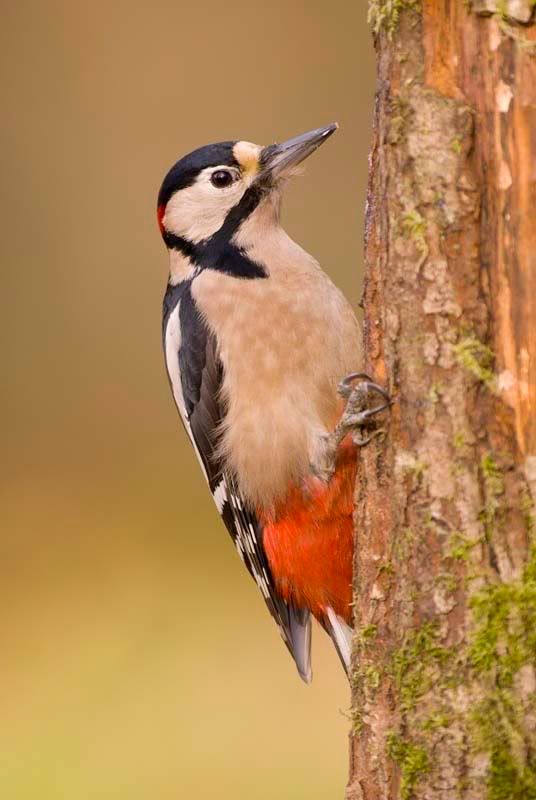
Many of these features can be seen well on this photo of Great Spotted Woodpecker here, taken in Sussex, England by David Plummer: http://www.davidplummerimages.co.uk/

Note the broad chisel-shaped bill with a sharp tip, The robust legs and feet with long sharp claws and the overall stout, strong body.

Thursday, 6 December 2007

Signs: acorns

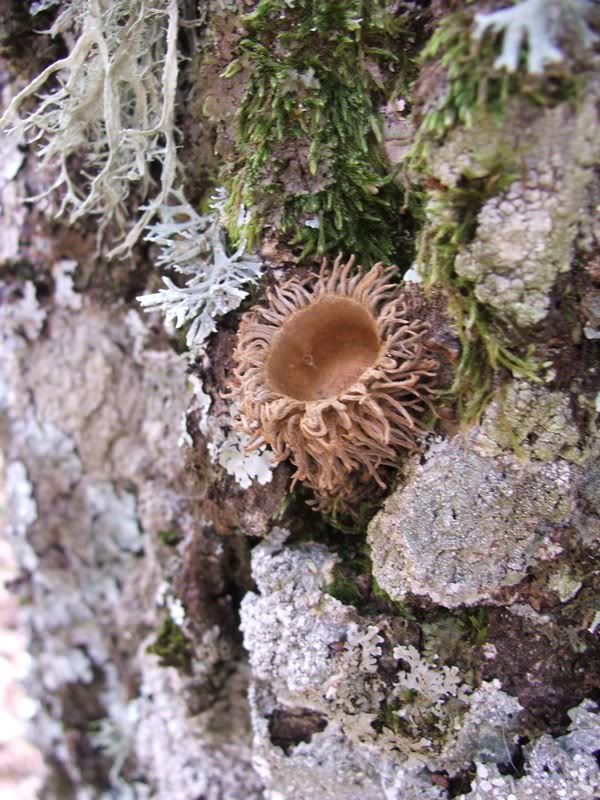
These photos of acorns wedged into crevices in tree trunks were taken by Adriano Castelmezzano in the Pollino area in Basilicata, southern Italy. These "anvils" or "workshops" were situated very low down on the trees, just above the ground. Food items such as these (and pine cones) are wedged into position and hacked open in situ. It is not always possible to say with certainty that such work has not been done by a Nuthatch Sitta europaea but it is more likely the work of a Great Spotted Woodpecker. Beak marks, which are not clear here, are often the best clue. The only other European woodpecker that regularly works with food items in this way is Syrian Woodpecker, and this species is not present in Italy.


Wednesday, 5 December 2007

Syrian and Great Spotted Woodpeckers excavating together

Not only did the female Syrian Woodpecker in the previous post (below) show unusual plumage, but she was also associated with a male Great Spotted Woodpecker, forming a pair. Together, the female Syrian and male Great Spotted excavated a nest-hole, in a false acacia (robinia) tree at Apaj, SE of Budapest, Hungary. Unfortunately, it is not known whether this pair subsequently mated and produced any young. Here are more photos, by Bence Kokay: 1st: female Syrian Woodpecker. 2nd: male Great Spotted Woodpecker.


Tuesday, 4 December 2007

Syrian Woodpecker: unusual plumage

The more I study woodpeckers, the more unusual things I find. European woodpeckers, especially the Dendrocopos species, the so-called "pied woodpeckers" often show unusual, atypical plumage features. Sometimes, the are so striking that it is hard to decide whether a bird is a hybrid of some kind or simply atypical. Most of the unusual plumages I have seen concern Great Spotted Woodpecker and Syrian Woodpecker. The photo here shows an adult female Syrian Woodpecker, taken at a nest-hole at Apaj, Hungary, by Bence Kokay, in spring 2007 (more on this nest in subsequent post). Note that the bird has a small red spot on the hindcrown, low down on the left side. Of course, female Syrians should not show any red on the crown, though juvenile females do. Are these red feather tips remnants of the bird's juvenile plumage ? Or is there another explanation ?

Monday, 3 December 2007

Quiz woodpecker 8

Here is the latest "mystery" woodpecker. A photo taken by my Hungarian friend Gabor Vasuta, in Hungary... What species is it ?

Middle Spotted Woodpecker, Abruzzo NP, Italy

This photo, taken by my fellow woodpecker enthusiast Paul Harris in mid-June 2007, is very important. It shows a Middle Spotted Woodpecker Dendrocopos medius with food in its bill at a nest hole in the Abruzzo National Park, central Italy. This species is very rare indeed in that area: this is only the 3rd nest ever found in the Abruzzo, the other two being found in the early 1980s.

Friday, 30 November 2007

Woodpecker artwork 2

Female Syrian Woodpecker at the nest hole, feeding chick, in Budapest. Oil on canvas by Szabolcs Kokay: http://kokayart.blogspot.com/